
Off-Grid vs Grid-Tied Solar: Which Suits Rural Moreton Bay & Sunshine Coast Properties?
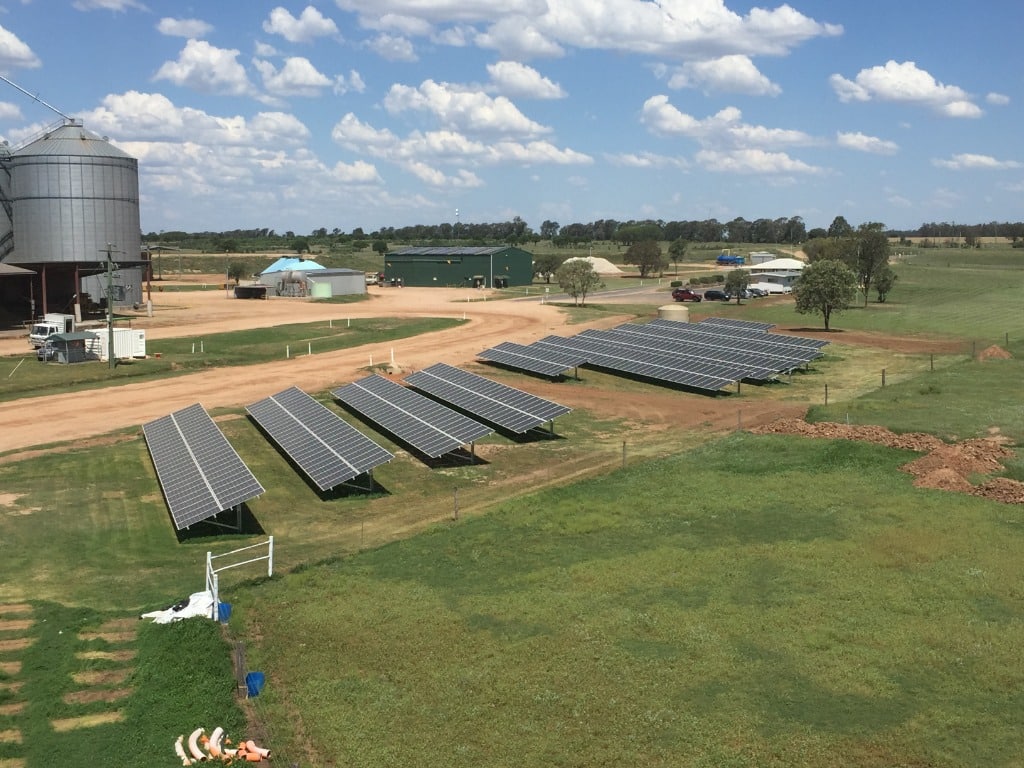
Every rural Moreton Bay or Sunshine Coast hinterland property that calls us asks a version of the same question: should we just go off-grid? The honest answer, backed by current industry cost data, is that for most properties within reach of an existing grid connection, a grid-tied system with battery backup delivers almost all the same independence for a fraction of the cost — off-grid only wins once the cost of connecting to the grid in the first place gets genuinely expensive.
The cost gap is the whole story
A grid-tied system with a home battery typically runs $12,000–$20,000 installed, sized around 10–15kWh of storage. A true off-grid system for the same style of home needs 30–40kWh of battery capacity plus a larger solar array to keep that battery full through cloudy stretches, and typically lands at $40,000–$65,000 — sometimes more for larger homes or harder sites. Almost every off-grid installation also needs a backup generator, adding a further $3,000–$8,000, because sizing batteries to cover extended cloudy periods without one becomes prohibitively expensive.
Grid-Tied vs Off-Grid: The Cost Gap
Typical fully installed cost for a comparable Moreton Bay or Sunshine Coast hinterland home.
When off-grid actually makes financial sense
Off-grid becomes competitive, rather than simply more expensive, in a specific situation: when the quoted cost of running a new grid connection to a property exceeds roughly $30,000. That number is common in the hinterland areas behind Moreton Bay and the Sunshine Coast for a new build a significant distance from the nearest power pole, or a remote parcel where the network operator’s connection quote reflects genuine infrastructure work — new poles, transformers, easements. If your connection quote is anywhere near that figure, running the off-grid numbers alongside it is worth doing properly rather than assuming grid connection is always cheaper.
For most established rural properties, grid-tied wins
If your property already has a grid connection, disconnecting from it to go off-grid rarely stacks up. A grid-tied system keeps the connection as a backstop for the rare stretch of cloudy days a battery cannot cover, and it can earn feed-in tariff credits on excess generation — income an off-grid system, by definition, never sees. The grid-tied battery also needs a fraction of the storage capacity, which means a smaller, cheaper, easier-to-maintain system doing almost the same job day to day.
Off-grid vs grid-tied, side by side
- Cost: grid-tied + battery $12,000–$20,000 vs off-grid $40,000–$65,000+ for a comparable home
- Battery size: 10–15kWh (grid-tied) vs 30–40kWh (off-grid)
- Backup: the grid itself (grid-tied) vs a generator plus oversized batteries (off-grid)
- Income: feed-in tariff credits available (grid-tied) vs none (off-grid, no export point)
- Maintenance: minimal ongoing monitoring (grid-tied) vs active energy management required (off-grid)
What actually decides it for your property
The right answer comes down to one number: your network operator’s quote to connect or extend supply to the site. If that figure is modest, grid-tied with a right-sized battery storage system almost always wins on cost, reliability and simplicity. If it is genuinely high — a new build kilometres from the nearest pole, or a remote block where the network quote reflects real infrastructure cost — a properly sized off-grid system deserves a serious look, generator included. We size both options against your actual connection quote and usage pattern before recommending either.
Frequently asked questions
Is off-grid solar cheaper than staying connected to the grid?
Usually not upfront. A comparable off-grid system typically costs two to four times more than a grid-tied system with battery backup, mainly because of the much larger battery bank and solar array needed to ride out extended cloudy periods without the grid as a backstop.
Do I need a generator if I go off-grid?
Almost always, yes. Without a backup generator, an off-grid battery bank has to be oversized dramatically to cover worst-case cloudy stretches, which adds far more cost than a $3,000–$8,000 generator does.
When does off-grid make more sense than connecting to the grid?
When your network operator’s quote to connect or extend grid supply to the property is high — commonly above roughly $30,000 for a remote or new-build site in the Moreton Bay or Sunshine Coast hinterland. Below that, grid-tied with battery backup is almost always the more cost-effective path.
Can I get feed-in tariff payments on an off-grid system?
No. Feed-in tariffs are only paid on energy exported to the grid, and an off-grid system by definition has no grid connection to export to. It is one of the ongoing costs of independence worth weighing against the upfront savings of staying connected.