
Hail Damaged Solar Panels: Why This Manly Home Upgraded Instead of Just Repairing
By SEBSS Energy Advisory · October 2026 · 6 min read
After a severe hailstorm swept through Manly on Brisbane’s bayside, damaging roofs and solar panels across the neighbourhood, one homeowner contacted SEBSS to assess their existing system and work out the best way forward.
Rather than simply replacing the damaged panels, we took the opportunity to redesign the system from the ground up. The result is more than a repair. It’s a modernised solar and battery system designed around how the household actually uses electricity today.
| Location | Manly, QLD |
| Problem | Solar panels damaged in a severe hailstorm |
| What we installed | New panels on a redesigned east and west layout, plus a GoodWe ESA hybrid inverter with battery storage |
| Outcome | Solar production spread across more of the day, with daytime surplus stored for the evening |
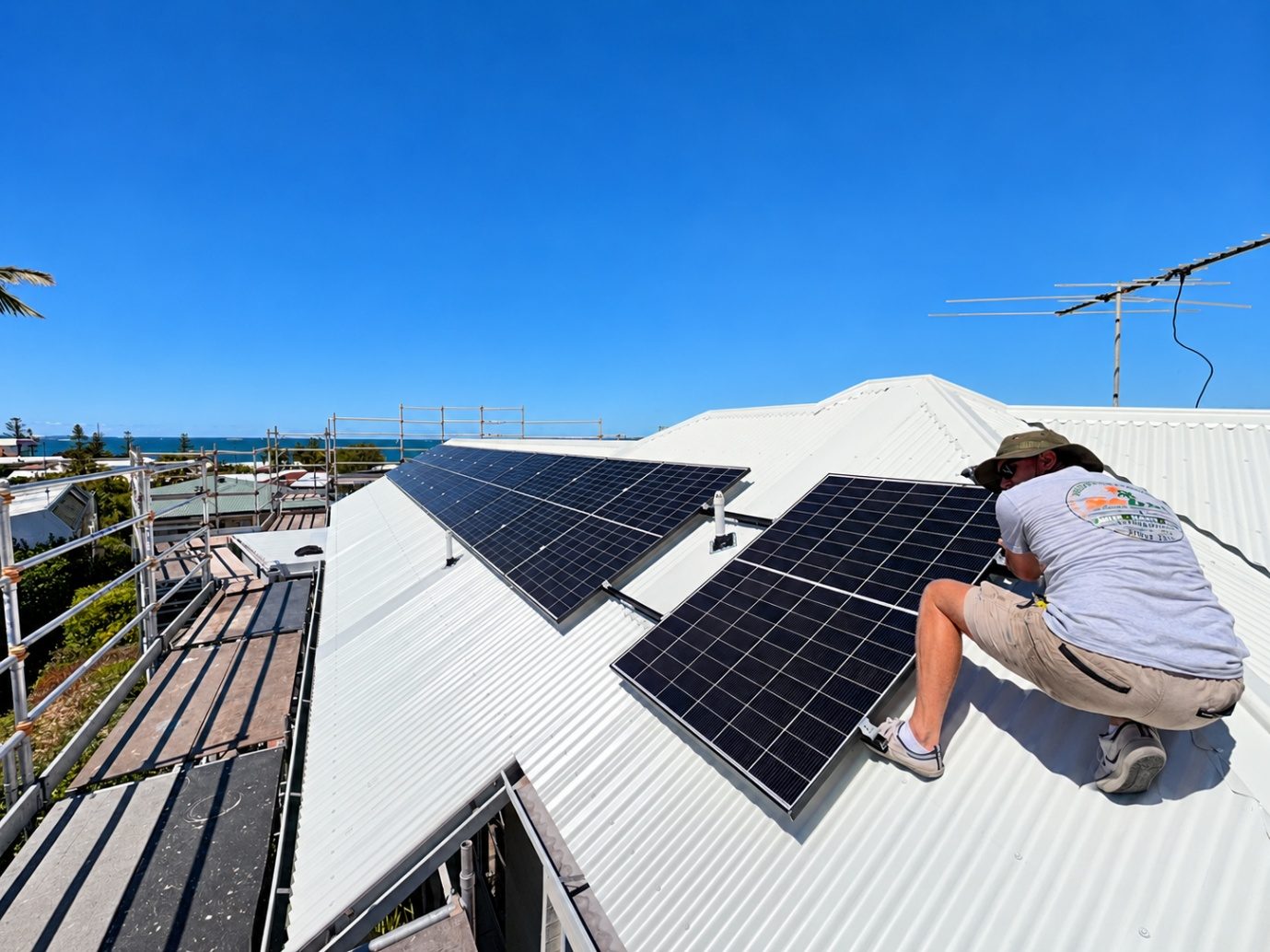
How to tell if hail has damaged your solar panels
Solar panels are built to take a beating. Panels sold in Australia are tested against hail impact as part of their certification, and most storms pass without a scratch. A big storm with large hailstones is a different story, and the damage is not always obvious from the ground.
Signs worth checking after a hailstorm:
- Cracked or shattered glass. Often visible from a second-storey window or in a photo taken from a distance.
- A drop in generation. Compare your inverter app or monitoring with the same weather a week before the storm.
- Error codes or alarms on the inverter, or the system shutting itself down.
- Damage to the roof around the panels, such as dented sheeting, broken tiles or bent gutters.
Some damage, such as micro-cracks inside the cells, can’t be seen at all and only shows up as lost output over the following months. That is why a proper inspection and output test matters, even when the panels look fine.
Safety first: do not climb onto the roof or touch damaged panels. Solar panels keep producing voltage whenever there is daylight, even when the system is switched off at the switchboard. Follow the shutdown procedure on the label beside your inverter and call a licensed electrician. Our storm season electrical safety checklist covers what to do before, during and after a storm.
Does home insurance cover hail damaged solar panels?
In many cases, yes. Rooftop solar is usually treated as part of the building, so storm and hail damage is often covered under home building insurance. Policies differ, though, so check your Product Disclosure Statement and speak to your insurer before any work starts.
To make the claim go smoothly:
- Take photos of the damage from the ground and note the date of the storm.
- Ask a CEC accredited installer for a written damage assessment and quote. Insurers generally want to know what failed and what it costs to make good.
- Keep your original installation paperwork, panel model and inverter details handy.
One thing that catches people out: if your panels are a few years old, the exact model may no longer be made. A “like-for-like” repair can then mean mixing newer panels with older ones, which isn’t always ideal on the same string. That is often the moment it makes sense to look at the whole system rather than patching one part of it.
Repair or upgrade? What we weighed up in Manly
The storm damage gave this homeowner a decision point. Replacing only the damaged panels would have put the system back the way it was. But “the way it was” had been designed years earlier, before home batteries were affordable, and before the household’s electricity use had changed.
So we looked at a few questions:
- How old is the existing inverter, and how much life is left in it?
- Is the current panel layout making the best use of the roof?
- When does the household actually use power, morning, afternoon or evening?
- Would storing daytime solar for the evening save more than exporting it?
The answers pointed to an upgrade rather than a straight repair. If you are weighing up the same choice, our solar system replacement service walks through what is worth keeping and what is worth replacing.
A new east and west panel layout
A new panel layout was developed to make better use of the home’s east and west facing roof space. East facing panels start producing earlier in the morning, while west facing panels carry production further into the afternoon. Together they spread generation across a broader part of the day, which suits a household that uses power across the day rather than only at midday.
It is a good example of why the “best” direction isn’t always north. We explain the trade-offs in detail in which direction should solar panels face in Queensland.
Adding a GoodWe ESA hybrid system with battery storage
We also installed a new GoodWe ESA hybrid system with battery storage. The ESA is an all-in-one unit that combines a hybrid inverter and battery in a single sealed cabinet, so the solar panels, battery and grid are all managed from one system.
- Modular battery capacity built from 5 kWh or 8 kWh modules, so storage can be sized to the household rather than to a fixed product size.
- Backup capability designed to keep the home running during a grid outage, depending on how the switchboard is set up.
- An IP66 rated, fanless design suited to Queensland conditions.
More importantly, it means more of the solar generated during the day is stored and used at night, when grid electricity is at its most expensive. You can read more about how we size and install home battery storage, or see the questions we ask before adding a battery to an existing solar system.
The result
The homeowner now has a modern solar and battery system rather than a patched-up older one: new panels arranged to produce across more of the day, a hybrid inverter with years of life ahead of it, and battery storage that shifts cheap daytime solar into the evening.
Hail damage is never welcome. But if your system needs significant repairs anyway, it is worth asking whether the money is better spent putting the old design back, or on a system built around how you use electricity now. See more of our work on the case studies page.
Frequently asked questions
Yes. Panels are tested for hail impact and most storms cause no damage, but large hailstones can crack the glass or cause micro-cracks in the cells that reduce output over time. If you’ve had a severe storm, have the system inspected and its output checked.
If you can see damage, or the inverter shows errors, shut the system down using the procedure on the label beside your inverter and call a licensed electrician. Never touch damaged panels or cabling. They can still carry voltage in daylight.
Often, yes, because rooftop solar is usually treated as part of the building. Cover varies between policies, so check your PDS and contact your insurer. A written assessment from a CEC accredited installer helps the claim.
Yes, and it is often the most cost-effective time to do it, because the system is already being worked on. Depending on the existing inverter, the battery can be added to it or the inverter can be replaced with a hybrid system like the GoodWe ESA.
Not always. If matching panels are still available and the rest of the system is in good shape, a partial replacement can work. If the model has been discontinued or the inverter is ageing, a redesign is often the better long-term result.
Storm or hail damage to your solar?
We inspect the system, write up the damage for your insurer and show you the like-for-like and upgrade options side by side, so you can decide with real numbers.