
Already Have Solar? Adding a Battery Isn't Just About Picking a Size
By SEBSS Energy Advisory · October 2026 · 7 min read
A lot of Queensland homes already have a perfectly good solar system that was installed a few years ago, before home batteries became as affordable and popular as they are today.
If the solar is still performing well, adding a battery can make a lot of sense. But it isn’t as simple as choosing a battery size and getting a price. At SEBSS, when you speak to us about adding a battery to an existing solar system, the first thing we’ll do is ask questions.
Why we start with questions, not a quote
We’ll want to understand your existing solar system, including the size and age of the system, what inverter you currently have and how much solar you are actually producing. More importantly, we want to know how you use electricity.
These questions matter because two houses with exactly the same size solar system can need completely different battery setups.
| What we ask | Why it matters |
|---|---|
| Are you home during the day? | Daytime use soaks up solar directly, leaving less surplus to charge a battery. |
| How much power do you use overnight? | Evening and overnight use is what a battery actually replaces. |
| Pool, electric hot water, air conditioning? | Big loads change both the battery size and how it should be scheduled. |
| Do you have, or plan to buy, an EV? | An EV can add thousands of kWh a year to a home’s usage and competes with the battery for solar. |
| Are your bills increasing? | Tells us whether usage, tariffs or a fading solar system is the real problem. |
| Do you want backup power in a blackout? | Not every battery and inverter combination can run the house off-grid. |
Should you keep your existing inverter?
This is another important part of the conversation. Depending on the existing system, we may be able to add a battery while keeping the current solar inverter. In other situations, replacing the inverter with a modern hybrid system may provide a better overall result.
In practice there are two main ways to do it:
- AC-coupled battery (keep your inverter). The battery comes with its own battery inverter and connects alongside your existing solar inverter. Your solar stays exactly as it is. This is often the simplest option when the existing inverter is relatively new and working well.
- Hybrid inverter (replace your inverter). The old solar inverter is swapped for a hybrid inverter that manages the panels and the battery together. It can be more efficient and often offers better backup options, and it makes sense when the existing inverter is ageing or out of warranty.
There isn’t one answer that suits every property. The age and condition of the existing equipment, system configuration, compatibility, backup requirements and what you’re trying to achieve all need to be considered.
Sometimes leaving a good solar system alone and simply adding battery storage is the right solution. Sometimes it makes more sense to use the opportunity to upgrade the entire system. We covered one of those upgrades in our hail damaged solar upgrade in Manly.
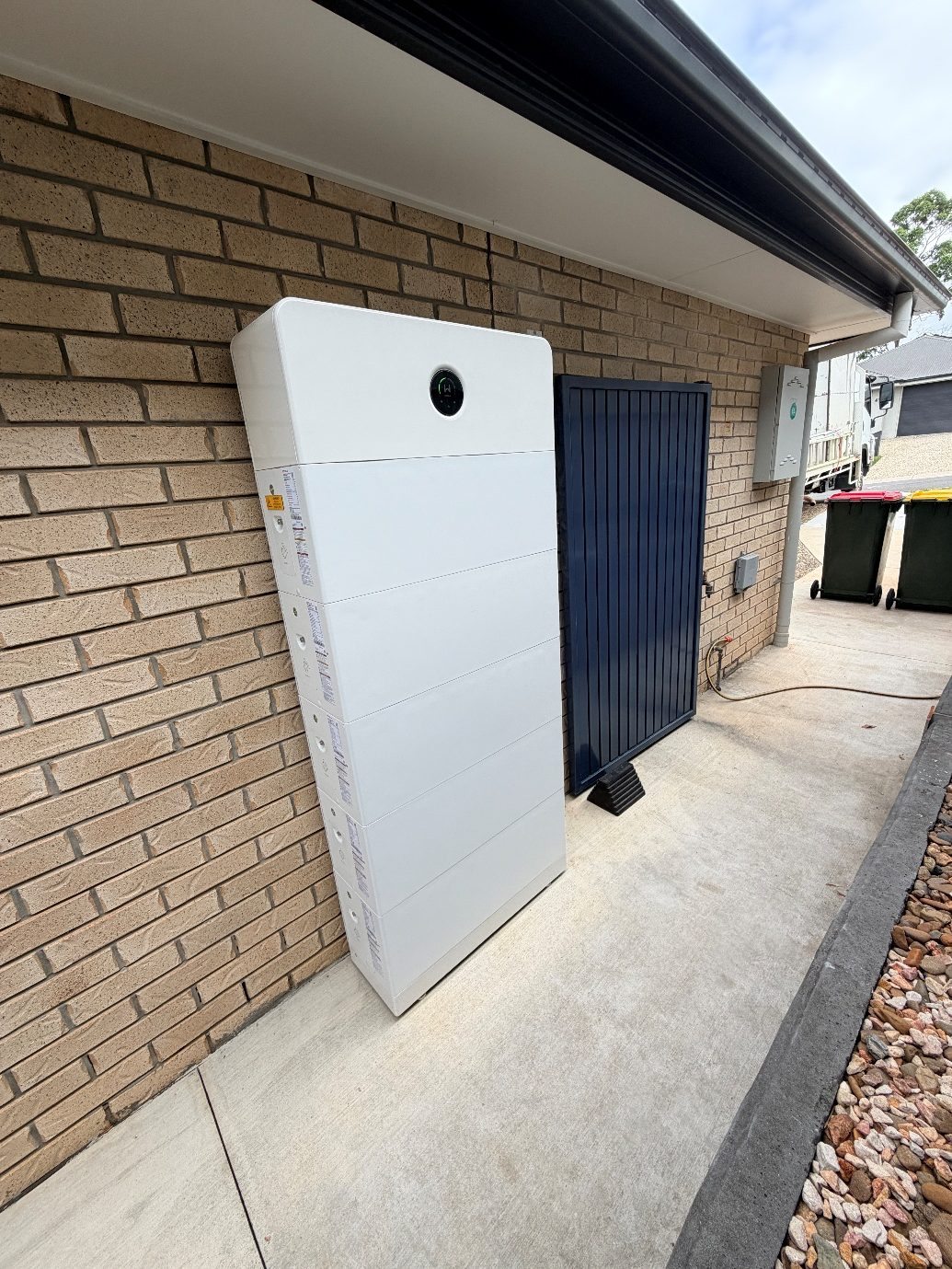
What size battery do you need?
Bigger isn’t automatically better. We look at how much excess solar you’re producing during the day and how much electricity you’re buying from the grid when the sun isn’t shining.
There’s little point installing a huge battery if your solar system can’t regularly charge it. On the other hand, undersizing the battery can mean you’re still buying significant amounts of expensive grid electricity every night.
A simple way to think about it:
- Overnight usage sets the useful upper limit. Your bill or smart meter data shows how much you buy after sunset.
- Daytime surplus sets what you can actually charge. An older 5 kW system may not fill a large battery in winter.
- Your plans set the margin. A battery being installed today should take into account what the household could look like three to five years from now, particularly with increasing electrification, EVs and changing electricity tariffs.
If the answer is that your solar is too small to charge the battery you need, adding panels at the same time is often worth pricing. Our guide to home battery sizing goes deeper on the numbers, and if an EV is on the horizon, see why charging an EV from solar beats exporting it.
What about blackout protection?
This is something worth discussing before choosing the equipment. Having a battery doesn’t necessarily mean your entire house will continue operating normally during a blackout.
Different battery and inverter combinations provide different levels of backup capability:
- No backup: some setups simply shut down with the grid, as standard solar does.
- Essential circuits backup: selected lights, power points and the fridge keep running.
- Whole-home backup: most of the house keeps running, within the limits of the inverter’s output.
The switchboard and electrical loads in the home also need to be considered, and older switchboards sometimes need work before backup can be wired in. Our electrical contracting team handles that side of the job too.
If blackout protection is important to you, we’ll discuss what you actually want running during an outage, rather than simply ticking a “backup included” box.
Are there rebates for adding a battery?
Yes. Batteries added to existing solar systems can qualify for the federal battery discount, which is applied at the point of sale through your installer. The amount depends on the usable capacity of the battery and changes over time, so we itemise it on every quote. For the current details, read battery rebates in 2026: what actually changed.
Questions first. Price second.
We know it’s easy to call around and ask: “How much for a 20 kWh battery?”
We’ll give you pricing, but anyone you speak to at SEBSS is going to ask you a few questions first. That’s because our job isn’t to sell you the biggest battery we can fit on the wall. It’s to work out what you’re trying to achieve, what equipment you already have and what combination actually makes sense for your property.
Your existing solar system may already be doing its job perfectly. The next step is making sure the battery does too. Find out more about our battery storage installations across Moreton Bay and the Sunshine Coast.
Frequently asked questions
In most cases, yes. Almost any grid-connected solar system can have a battery added, either alongside the existing inverter (AC-coupled) or by replacing the inverter with a hybrid unit. The right option depends on the age and type of your current equipment.
Not necessarily. If your inverter is relatively new and working well, an AC-coupled battery can be added without touching it. If the inverter is ageing or you want stronger backup, a hybrid inverter is often the better long-term choice.
It depends on how much power you use after sunset and how much surplus solar you have to charge it. We size batteries from your actual usage data and allow for changes such as an EV or electric hot water in the next few years.
Only if the system is designed for it. Some batteries have no backup, some run essential circuits and some can run most of the house. Tell us what you want running in an outage and we’ll design around that.
Yes, eligible batteries attract a federal discount applied at the point of sale. The value depends on battery capacity and changes over time. See our battery rebates article for the current figures.
Thinking about adding a battery?
Send us a copy of a recent power bill and a photo of your inverter. We’ll come back with the questions that matter for your home, then a recommendation and a fixed price.